


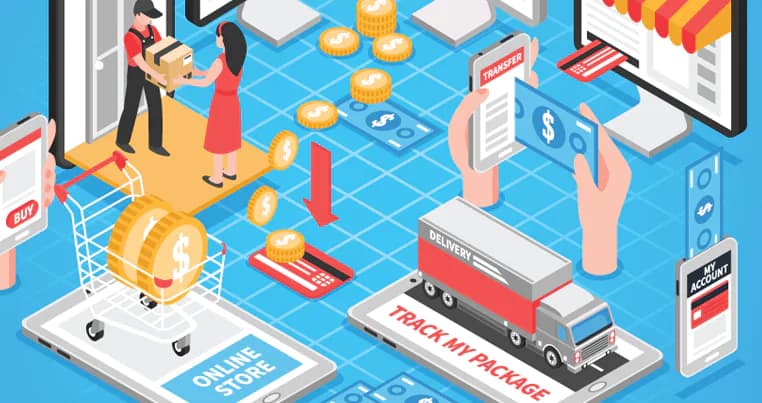
Which type of B2B ecommerce solution should you choose?

 Anders on Linkedin
There are three types of solutions when you need a B2B customer portal.
- A pure data-viewing portal only shows existing data from the ERP system, without being an actual ecommerce solution.
- A classic B2C webshop solution, such as Shopify, Sana, DynamicWeb, Magento or WooCommerce, is built to sell to private customers and market the company outward.
- And a pure B2B ecommerce platform is built for trade between companies with customer-specific prices, discounts and assortment.
Which type suits you typically depends on whether it's marketing or finance and management driving the need.
How do the three solution types differ from each other?
The three solution types differ in how much customer-specific functionality they have out of the box, and in who typically drives the choice internally in the company. Here's how the differences look:
| Criterion | Data-viewing portal | B2C webshop solution | B2B ecommerce platform |
|---|---|---|---|
| Examples | Viewing module for the ERP system | Shopify, Sana, DynamicWeb, Magento, WooCommerce | Dedicated B2B ecommerce platform |
| Customer-specific prices | No, shows only ERP data | Usually requires customization | Yes, out of the box |
| Customer-specific assortment | No | Requires customization | Yes |
| Purchase on invoice without prepayment | Not relevant, no orders are placed | Often requires customization | Yes |
| Order status and track and trace | Partially | Yes, for consumer purchases | Yes, for business purchases |
| Actual sales channel | No | Yes | Yes |
| Who typically drives the choice | IT or finance | Marketing or web manager | CFO, owner or managing director |
| Best fit | Customers who only need to see existing ERP data | Companies selling to consumers that need to market themselves | Companies selling to other companies on customer-specific terms |
What is a pure data-viewing portal?
A pure data-viewing portal shows data from the ERP system, without being an actual ecommerce solution.
You can see invoices, see orders and reorder goods you've already bought. But you can't place a completely new order the way you would in a webshop. The portal works as a window into the ERP system, not as an independent sales channel.
What is a classic B2C webshop solution?
A classic B2C webshop solution, such as Shopify, Sana, DynamicWeb, Magento or WooCommerce, is built to sell to private customers and market the company outward.
These solutions are strong at what you need when selling to consumers: product pages, campaigns, payment flows and search engine optimization. But if your customers are other companies, the solutions typically lack the strength for customer-specific prices, discounts and assortment, because that isn't the core of the solution.
What is a pure B2B ecommerce platform?
A pure B2B ecommerce platform is built for trade between companies rather than trade with private customers.
Before most customers are satisfied with a B2B platform, it needs to be able to show:
- customer-specific prices
- customer-specific discounts
- customer-specific assortment and stock
- order status, including track and trace
- invoices and outstanding balances
And you need to be able to place an order without paying immediately, so you receive an invoice afterward instead of having to pay by card at checkout.
Which type of solution suits you?
It depends on who is driving the need in your company.
If it's marketing or a web manager who needs to use the solution to sell the company outward, the need lies closer to a classic B2C webshop solution. If, on the other hand, it's a CFO, an owner or a managing director driving the project, that typically points toward a pure B2B ecommerce platform.
Frequently asked questions
Is a pure data-viewing portal the same as a B2B ecommerce platform?
No. A data-viewing portal only shows existing ERP data such as invoices and orders, while a B2B ecommerce platform is an independent sales channel with customer-specific prices, discounts and assortment.
Can you use Shopify or a similar B2C webshop solution for B2B sales?
Yes, but only with customization. The solution is built to sell to consumers, and customer-specific prices, discounts and assortment usually have to be built in, because it's not part of the core functionality.
What's the most important difference between a B2C webshop and a pure B2B platform?
The most important difference is that a B2B platform is built so each customer sees their own prices and their own assortment and can trade on invoice, while a B2C webshop is built to sell the same thing to all visitors with payment at checkout.
Who typically decides whether it should be a B2C webshop or a B2B platform?
It's typically marketing or a web manager who points toward a B2C webshop solution, while a CFO, an owner or a managing director typically points toward a pure B2B ecommerce platform.
Can you need several of the solution types at the same time?
Yes. Some companies have a public B2C webshop for marketing and new sales and a separate B2B platform for existing business customers with their own prices and agreements.
Is a data-viewing portal a good start if you're not ready for a full B2B platform?
Yes, if the need is only to give customers access to see invoices and orders and to reorder. But if customers also need customer-specific prices or need to be able to trade on invoice, then a data-viewing portal isn't enough.
 How do you avoid your customer getting one order number on the webshop and a different one in the ERP system?
 Why are companies looking for a new B2B ecommerce portal?
 How can Abakion B2B Ecommerce fund your upgrade to Business Central?
 Abakion B2B Ecommerce supports punch-out and API access to your data
 What criteria should you check before choosing a B2B ecommerce solution?
- Which type of B2B ecommerce solution should you choose?
 How do you avoid getting locked in to a B2B ecommerce vendor?